The Topography of Encirclement
You learn the rhythm before you learn the reason. Fifteen seconds of stillness pressed against the concrete wall of an apartment block, eyes tracking the empty boulevard, ears tuned to a silence that means nothing because the men in the hills do not announce themselves. Then you run. Not walk — run, bent low, weaving in a pattern you learned from a neighbor who learned it from a burial, because the boy who walked upright and unafraid across this same stretch of asphalt three weeks earlier is the reason the pattern exists at all. You cross Zmaja od Bosne, the avenue that will earn its nickname before the year is out, and the entire time you are aware, in the animal part of your brain that does not need translation, that somewhere above you, in the tree line or the window of a half-built hotel tower, a man with a rifle and a scope is deciding whether today is the day. This is not metaphor. This is Tuesday. This is a woman named Fatima or a man named Emir crossing to buy bread, and the geography of the city has made her, for the length of that crossing, into a target in the truest optical sense: a shape isolated against a background, ranged and measured by physics that do not care about her name.

To understand why Sarajevo could be held hostage for one thousand four hundred and twenty-five days — longer than Leningrad, longer than Stalingrad, the longest siege of a capital city in the history of modern warfare — you have to stop thinking about the war first and start thinking about the valley. Sarajevo sits in a bowl. The Miljacka River cuts through its floor, and the city climbs the flanks of that bowl in terraces of red-tiled roofs, but the bowl itself is ringed by mountains that rise sharply on nearly every side: Trebević to the south, Igman and Bjelašnica beyond it, Žuč and Hum to the north, Mojmilo squatting closer in. This is not scenic backdrop. This is a kill box built by tectonic accident and inhabited, over centuries, by people who built a metropolis inside what amounts to an amphitheater — and an amphitheater, by design, gives every advantage to whoever holds the upper rows.
Military planners have a term for this kind of terrain: plunging fire, the capacity to shoot down into a space from elevated, often concealed positions, which means that unlike a siege of a fortress with defined walls and gates, the encirclement of Sarajevo required no breach, no ladder, no battering ram. The attacker was already, geologically, above the defender before a single shot was fired. When the forces of Republika Srpska, commanded by Ratko Mladić, took up positions in the hills in April of 1992, they were not conquering territory so much as occupying furniture that had always been there, repurposing a landscape that generations of Sarajevans had treated as scenery — the ski slopes of the 1984 Winter Olympics, the pine forests where families picnicked — into an axis of observation and fire covering nearly the entire urban basin below.
What this meant practically was that there was no interior. A city is supposed to offer its inhabitants the ordinary mercy of depth, of rooms behind rooms, of streets that curve out of sightlines. Sarajevo’s own architecture, laid out along the narrow floor of the valley and stacked upward toward the encircling slopes, meant that height was not refuge but exposure, and that certain streets — long, straight, running the length of the valley floor — became optical corridors, throats of visibility connecting the muzzle in the hills directly to the pedestrian’s chest. The city built for one purpose was inherited, in the span of a single spring, for another.
Nasumice
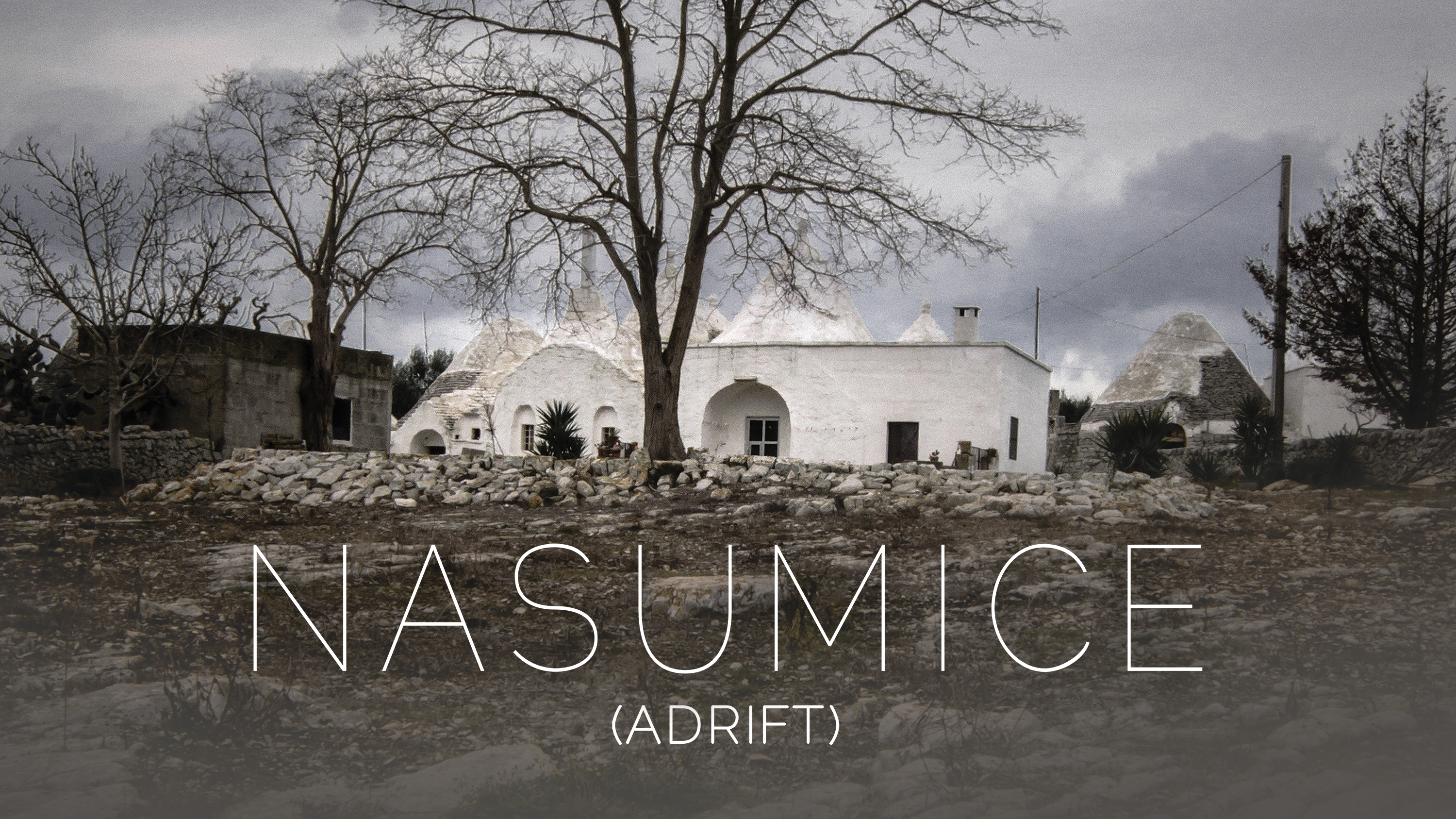
Drama, by Caleb Burdeau, United States/Italy/Bosnia, 2018.
Italy, 1994. The war in the Balkans drags on without end. Elvis, a young man from Sarajevo, is photographing tourists with his Polaroid to get by. After his camera is stolen, Elvis decides to visit Rodolfo, a stranger he met by chance in Venice. Their brief and solitary encounter takes place in the timeless landscape of the whitewashed villages, green hills and olive trees of southern Italy.
Set against the backdrop of the Yugoslav wars of 1994, Nasumice is a film about existential drift and the search for a sense of belonging. The project was born from the stories of a family friend to the director Caleb about his travel experiences in southern Italy in the 70s. When Caleb was working at Bela Tarr's film factory in Sarajevo, he met Moamer Kasumovic and the idea of making the film with Moamer in the lead role took hold. The film is a remarkably direct exploration of alienation and isolation with a unique story and beautiful cinematography. The cities, towns and hills of southern Italy form the backdrop for the story of Elvis and Rodolfo. The director combines long sweeping shots of the countryside and fixed scenes with the protagonists to create the feeling of isolation on the screen. Nasumice was shot in Venice, Rome and the Puglia countryside, and is a visually stunning independent film despite its low budget. The world premiere of Nasumice took place at the 2018 Sarajevo Film Festival.
LANGUAGE: Italian, English, Bosnian
SUBTITLES: English, Spanish, French, German, Portuguese
The Collapse of Yugoslav Cohabitation
You could still, in the spring of 1980, walk through a Sarajevo apartment block and find a Serb Orthodox family sharing a landing with Bosniak Muslims and a Croat Catholic widow, their children trading lunches without anyone remarking on it, because there was nothing to remark on. Josip Broz Tito had died that May, and the funeral in Belgrade drew more foreign dignitaries than any state burial of the century outside a superpower capital, four kings, thirty-one presidents, twenty-two prime ministers, a spectacle of global deference to a man who had spent thirty-five years insisting that his federation of six republics and two autonomous provinces had transcended the very hatreds that had drenched the region during the Second World War. The phrase he left behind, bratstvo i jedinstvo, brotherhood and unity, was not a naive slogan but an engineered outcome, maintained through a specific architecture: a rotating collective presidency designed after 1974 so that no single republic or nationality could dominate the state, a secret police apparatus that punished nationalist expression as severely as it punished dissent against socialism itself, and an economy of shared industrial projects that physically bound Slovenian factories to Macedonian mines to Bosnian steel plants in chains of interdependence that made secession look like self-amputation.
What collapsed after 1980 was not an ancient hatred finally released from a cage, a metaphor that would later prove enormously convenient for Western journalists and policymakers who needed a story simple enough to justify inaction. The historian Robert Donia, in his study of Sarajevo’s history, and the political scientist Susan Woodward, in Balkan Tragedy, published in 1995, both dismantled that convenient fiction by showing how the actual mechanism was closer to bureaucratic entropy meeting deliberate political arson. The rotating presidency that Tito had built to prevent any single leader from monopolizing power meant that after his death, no figure possessed the authority to manage the debt crisis that hit Yugoslavia in the early 1980s, when the country owed roughly twenty billion dollars to foreign creditors and inflation climbed past two hundred percent by 1989. Economic desperation searched for a narrative, and nationalism supplied one that was ready-made, portable, and emotionally efficient in a way that austerity memoranda never could be.
Slobodan Milošević did not invent Serbian grievance, but he weaponized it with a precision that deserves to be studied the way one studies a controlled demolition. His speech at Gazimestan in June 1989, delivered to nearly a million people at the six-hundredth anniversary of the Battle of Kosovo, invoked medieval defeat to justify contemporary centralization, folding the autonomy of Kosovo and Vojvodina back into Serbian control and signaling to every other republic that the federal balance Tito had constructed was now negotiable by force. Franjo Tuđman answered in kind from Zagreb, rehabilitating symbols of the wartime Ustaše state with enough ambiguity to alarm Croatia’s Serb minority while consolidating a Croatian nationalist base of his own, and by 1990 both men were running not countries but campaigns, treating multiethnic coexistence as an obstacle to be argued away rather than a fact to be governed.
Sarajevo sat at the exact point where this logic had nowhere to go. The city’s 1991 census recorded a population that was roughly forty-nine percent Muslim, thirty percent Serb, eleven percent Croat, and a remaining slice that had specifically registered as Yugoslav, refusing the ethnic categories altogether, a refusal that had been common enough in the city’s intermarried neighborhoods to constitute its own quiet political statement. That statement was precisely what the new nationalist arithmetic could not process, because a politics built on ethnic majorities requires citizens to sort themselves into columns, and Sarajevo’s Olympic-hosting, jazz-playing, mixed-marriage cosmopolitanism had spent decades teaching people not to.

1425 Days Counted in Bread and Water
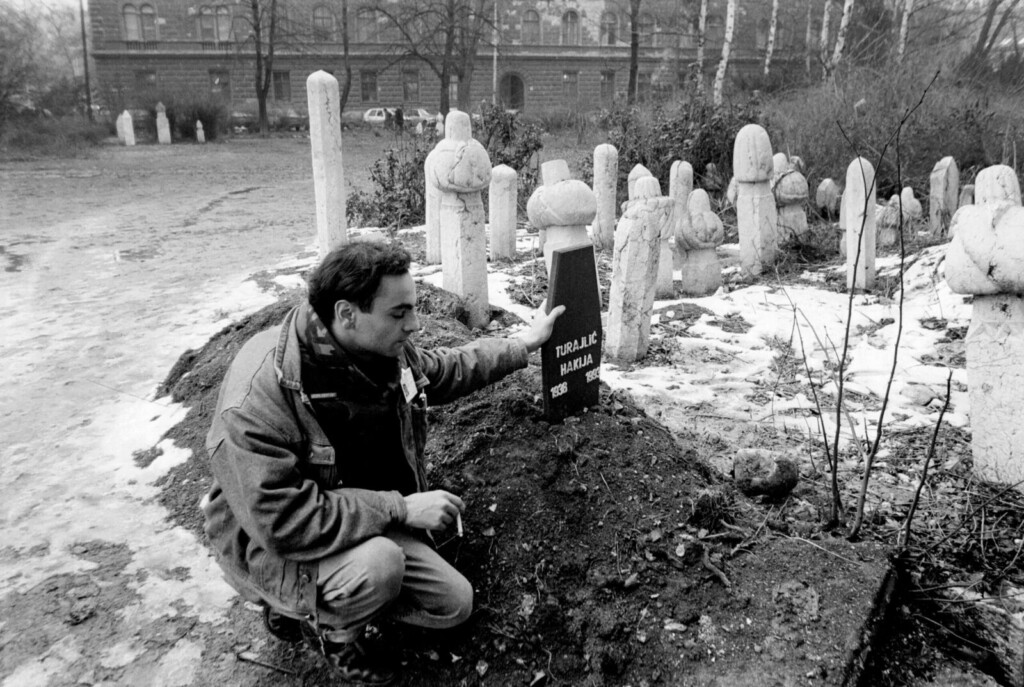
You wake before the shelling resumes, not because you have chosen to but because the body has learned to anticipate patterns the mind refuses to normalize, and the first thought is never about safety, it is about water. Where is the nearest functioning tap, how many buildings between here and there are exposed to the hills, whether the Miljacka’s edges hide snipers who have had eleven months to memorize every civilian silhouette that has ever crossed an intersection at a run. This is not a metaphor for deprivation. It is deprivation, quantified: by the summer of 1993 the average Sarajevan was surviving on somewhere between three and five liters of water a day, collected under fire from the brewery on Franjevačka street, one of the only sources the besieging forces had not managed to poison or cut, and UNHCR convoys, when they were allowed through at all, delivered a diet that hovered stubbornly around a thousand calories, less than half of what an adult needs to simply exist without wasting away.
The numbers accumulate the way rubble does, indifferent and enormous. Nearly ten thousand five hundred people killed in the city over the course of the siege, more than fifteen hundred of them children, and this inside a metropolitan population that had numbered around four hundred thousand before the Yugoslav People’s Army ringed the hills with artillery in April of 1992. The city absorbed an average of approximately three hundred twenty-nine shell impacts a day at the siege’s most intense periods, according to United Nations figures compiled from observer reports, and on one day in July of 1993 that figure spiked past three thousand five hundred. These are not statistics that sit comfortably in the register of the past. They describe a city in which grandmothers timetabled their grocery runs by the pattern of gunfire the way people elsewhere check a weather app.
Every material system a city depends upon without noticing was severed deliberately and simultaneously. Electricity vanished for most residents for stretches lasting months. Gas lines were cut. The tram system, which had been Sarajevo’s pride since the Habsburg era and one of the first electric tramways in Europe, sat frozen on tracks that had become killing corridors, since the same wide straight avenues that let trams run efficiently also gave snipers on the surrounding hills unobstructed lines of sight, which is how the stretch along Zmaja od Bosne earned its nickname among journalists and residents alike as Sniper Alley, a place you crossed running, zigzagging, or not at all.
The single structure that did more than any humanitarian gesture to keep the city’s blood moving was not delivered by any international body but dug by hand, beginning in March of 1993, underneath the runway of the UN-controlled airport, connecting the besieged city to the relatively free territory of Dobrinja and beyond it to Bosnian government-held Mount Igman. The tunnel ran roughly eight hundred meters, barely over a meter and a half in height for most of its length, forcing grown men to walk bent double through mud and standing water while carrying sacks of flour, cigarettes, weapons, sometimes stretchers bearing the wounded, sometimes the small coffins that were needed constantly and never in sufficient supply. It was completed by the Bosnian Army’s engineering units in June of 1993 and remained the only land route in or out of the city that did not require crossing territory controlled by the besieging forces, meaning that for nearly three years the entire circulatory function of a European capital ran through a hole in the ground barely wide enough for a man’s shoulders.
The Snipers and the Architecture of Fear
You learn the geometry of a city the way a hunted animal learns a forest, which is to say instantly and permanently. In Sarajevo, between 1992 and 1996, the residents developed an entirely new cognitive map of their own streets, one layered invisibly over the old map of shops and cafés and tram stops. This new map had nothing to do with distance or convenience. It was drawn according to which intersections offered a clean line of sight from the hills, which walls were tall enough to break that line, which forty meters of open pavement might cost you your life and which might not. Children in Sarajevo grew up fluent in trigonometry they never studied in school, calculating angles from apartment blocks to sniper positions on Trebević and Grbavica with the same unconscious ease that children elsewhere calculate the distance to a bus stop.
This is the essential distinction between siege as a strategy of attrition and siege as a strategy of terror. A conventional siege, in the historical sense that Thucydides describes at Plataea or that besieged Leningrad endured through the winter of 1941, starves a population into surrender through the denial of food, water, and resupply. It is slow, bureaucratic, almost impersonal in its cruelty. The Sarajevo siege incorporated that logic, but it added something else: a mechanism of randomized, individualized violence that made every single civilian body a potential target at any moment, with no pattern reliable enough to guarantee safety. The Bosnian Serb Army held the high ground surrounding the city on three sides, and from those elevated positions, marksmen equipped with Dragunov rifles and, in some documented cases, simply hunting rifles, fired down into streets, markets, funerals, and breadlines. The United Nations later estimated that over the course of the siege, more than a thousand civilians, including well over a hundred children, were killed by sniper fire specifically, distinct from the tens of thousands of deaths caused by shelling and starvation.
The boulevard connecting the airport to the city center, officially Zmaja od Bosne street, became known internationally by a nickname coined by journalists and soldiers alike, Sniper Alley, and the name stuck because it described something functional rather than poetic. This was not a battlefield in any classical sense. It was a commuting route, a place where people walked to work, pushed children in strollers, carried water containers, and every single crossing became a wager against an unseen calculator on a rooftop or hillside. Survivors have described running in zigzag patterns, waiting behind burned-out trams for what felt like an intuitive signal to move, watching for the telltale glint of a scope on a distant building. The psychologist Ervin Staub, who has written extensively on the origins of genocide and mass violence, has argued that this kind of unpredictable, individualized targeting produces a specific psychological state distinct from the fear generated by artillery, which at least follows a logic of area and timing. Sniper fire targets the individual body, chosen or not chosen for reasons the victim can never know, and this uncertainty itself becomes the weapon.
The demoralization was never incidental. Radovan Karadžić’s forces held Sarajevo under observation from positions that had been, in some cases, prewar ski resort infrastructure built for the 1984 Winter Olympics, the same slopes where the world had watched Torvill and Dean skate to gold eight years earlier now repurposed as vantage points for killing pedestrians. The irony was not lost on residents, many of whom had attended those very Olympics as spectators or volunteers. To be shot at from the mountain that once hosted figure skating was to experience the total inversion of what the city had believed itself to be, a cosmopolitan, multiethnic Olympic host transformed into a shooting gallery, and this transformation was, in its cruelty, entirely deliberate, calculated to convince the population that no former identity, no international recognition, no accumulated civic pride could protect a single body crossing a single street.
The World Watching Through the Frame
A woman in Sarajevo turns on her television in 1993 and sees her own street. Not a photograph of it, not a description, but the actual corner where her son buys bread, framed now by a camera crew from a network whose name she can barely pronounce, narrated by a voice thousands of miles away describing her life as an event. She recognizes the bakery. She recognizes the exact spot where, three weeks earlier, a woman was hit by a sniper and left in the open because anyone who approached became a second target. The footage has been playing for months on channels across the world, and yet nothing about her days has changed except that now she watches herself being watched.
Susan Sontag, who would eventually walk those same streets to stage Waiting for Godot in a besieged theater in 1993, had already spent two decades interrogating what it means to look at atrocity from a position of safety. In On Photography, published in 1977, she argued that photographs do not simply record suffering, they domesticate it, converting the unbearable into the consumable, training the eye to absorb horror as a category of experience rather than a demand for action. By the time she wrote Regarding the Pain of Others in 2003, partly as a response to what she had witnessed in Bosnia, she had sharpened the argument into something closer to an indictment: the image of war does not necessarily produce solidarity, it can just as easily produce a kind of satisfied spectatorship, the sense of having borne witness as a substitute for having done anything at all.
Sarajevo became, in this sense, the most photographed siege in history up to that point, and also one of the most politically inert. Correspondents from CNN, the BBC, and dozens of other outlets set up in the Holiday Inn on Zmaja od Bosne, the same yellow-brick hotel that faced directly onto the boulevard nicknamed Sniper Alley, and from its damaged rooms they filed stories that reached hundreds of millions of viewers within hours. The immediacy was unprecedented. Satellite technology meant that a mortar strike on the Markale marketplace, which killed sixty-eight people in February 1994, could be described on the evening news in London or New York before the blood had been washed off the pavement. And still the siege continued for two more years.
The United Nations, meanwhile, had declared Sarajevo one of six so-called safe areas in Bosnia and Herzegovina in 1993, a designation that implied protection without providing the mandate, the troops, or the political will to enforce it. UNPROFOR forces on the ground were instructed toward neutrality and self-defense, not intervention, which meant peacekeepers could watch shelling from checkpoints without authorization to fire back. The phrase safe area became, over the following two years, a kind of dark joke among the besieged themselves, since nowhere within the city was reliably safe from artillery positioned in the surrounding hills, and the label seemed to exist primarily for the comfort of the international bodies that had issued it, a linguistic gesture that let diplomats speak as though action had already been taken.
This gap between visibility and consequence produced something Sontag identified precisely: compassion, she wrote, is an unstable emotion, it needs to be translated into action or it withers. Viewers in Paris or Chicago could watch children crossing open intersections at a sprint to avoid sniper fire, could watch the Sarajevo Roses, those scars left in pavement by mortar shells later filled with red resin to mark where people had died, and could feel the appropriate horror, and then change the channel, because the images arrived without any accompanying mechanism that translated feeling into policy. The war in Bosnia was covered more thoroughly than almost any conflict before it, and the coverage itself became a kind of alibi, evidence that the world had seen, as though seeing were the same thing as intervening, as though the camera’s presence discharged some obligation that only troops on the ground could actually meet.
A vision curated by a filmmaker, not an algorithm
In this video I explain our vision
Culture as Resistance and Provocation

A man in a dinner jacket carries a chair into the middle of a street where a mortar shell has just killed twenty-two people waiting for bread, and he sits down, and he plays Albinoni’s Adagio in G minor on a cello, day after day, for twenty-two days, one for each of the dead, while snipers watch from the hills and decide, for reasons no one has ever fully explained, not to fire. Vedran Smailović did this in the spring of 1992 in the ruins of the Vase Miskina street market, and the image traveled faster than any dispatch from the front, faster than the casualty figures, faster than the diplomats. It became, almost instantly, the visual shorthand for the entire siege: culture against barbarism, Bach against artillery, a single human figure insisting on beauty in a place that had been sentenced to ugliness. But the neatness of that story should make us suspicious of it, because sieges do not produce clean allegories, they produce people trying to survive an unbearable stretch of time with whatever tools they have left, and sometimes the tools are cellos.
The Sarajevo String Quartet kept rehearsing in a bank vault because it was one of the few rooms in the city with no windows to shatter. The Sarajevo Film Festival, now one of the most respected in Eastern Europe, was founded in 1993, inside the siege itself, not after it, with a single 16mm projector and an audience that had walked to the theater through streets marked with painted signs warning of sniper lines, red arrows spray-painted on pavement reading “Pazi, Snajper.” The National Theatre staged productions with actors who had not eaten properly in weeks, under a roof patched with plastic sheeting because the original had been shredded by shrapnel. Susan Sontag arrived in the city in 1993 and directed a production of Samuel Beckett‘s Waiting for Godot, performed by candlelight because the electricity was gone, and the choice of that particular play, a play about waiting for something that never arrives, was not lost on anyone in the audience who had been waiting three years for the world to intervene.
The temptation is to read all of this as proof of an indestructible human spirit, the kind of phrase that appears on gallery placards and documentary voiceovers, and there is truth in it, but the phrase also does a kind of quiet violence to the people it describes, because it converts their desperation into inspiration for people who will never have to sit in a bank vault to rehearse a string quartet. Susan Sontag herself, writing about the siege for the New York Review of Books, was aware of this tension, aware that her presence risked becoming a kind of moral tourism, a writer borrowing the city’s suffering to certify her own seriousness. The Sarajevans she worked with were not interested in being symbols. They were interested in an evening where the city was still a city, where a stage still existed, where an audience could sit together in the dark and not think, for ninety minutes, about the hills.
There is also a harder question underneath the admiration, which is what it means that the world found the cellist so much easier to absorb than the siege itself, that a single man playing Albinoni generated more international attention in some registers than the shelling of the National Library or the deaths at the marketplace he was mourning. Susceptibility to beauty can become a way of not looking at the thing beauty is responding to. Jean Baudrillard, writing skeptically about media spectacle during the Gulf War the year before, argued that mediated suffering risks becoming unmoored from the suffering itself, consumed as image rather than confronted as fact, and Smailović’s photograph, reproduced in newspapers worldwide, ran the same risk, an emblem so aesthetically satisfying that it could substitute for understanding rather than provoke it. None of this diminishes what he did in that street. It only means the act belonged simultaneously to two economies, the internal one of grief and defiance among people who had nowhere else to put their pain, and the external one of a world deciding which images of a war it was willing to sit with.
The Reckoning at The Hague
A courtroom in The Hague does not smell like anything. This is the first thing that strikes anyone who has read the testimonies before watching the recordings: the antiseptic neutrality of the room, the beige panels, the headphones through which a woman describes the day her son’s spine separated from his body on Sniper Alley, translated in real time into French, English, Bosnian, the emotion arriving a half-second late through the interpreter’s throat. Radovan Karadžić sat in that room for years, taking notes, sometimes cross-examining witnesses himself, a man who had once published a children’s poetry collection now asking a survivor to clarify the exact angle from which the shell had fallen.
The International Criminal Tribunal for the former Yugoslavia was established in 1993, while the siege was still active, which means the machinery of justice began assembling itself in the same months that mortars were still landing in Markale market. This simultaneity matters. It was not a tribunal built in hindsight, safely after the fact, the way Nuremberg came after 1945 with the guns already silent. The ICTY was drafting its statutes while Sarajevo’s population was still counting its dead in real time, which gave the institution a strange, unprecedented character: international law trying to define crimes against a civilian population while those crimes were still being committed, live, on European television.
Karadžić was finally arrested in 2008, after thirteen years as a fugitive, having reinvented himself as Dragan Dabić, a practitioner of alternative medicine with a long white beard, lecturing on human quantum energy in Belgrade cafés, hiding in plain sight the way perpetrators so often do, protected less by cunning than by the simple unwillingness of people around him to ask the obvious question. He was convicted in 2016 on charges including genocide, for the Srebrenica massacre, and crimes against humanity, which explicitly included the siege of Sarajevo, the campaign of sniping and shelling categorized by the court as a form of terror deliberately inflicted on a civilian population to break its will. The sentence was life imprisonment, upgraded on appeal in 2019 from the original forty years.
Ratko Mladić, arrested in 2011 in Lazarevo after sixteen years in hiding, protected for much of that time by remnants of the Serbian state apparatus, was convicted in 2017 on similarly exhaustive charges. His trial produced one of the most examined moments in the tribunal’s history when he was forcibly removed from the courtroom for outbursts, his lawyers arguing his health made him unfit to stand, the prosecution presenting maps, artillery logs, intercepted communications in which officers discussed shelling schedules with the same bureaucratic flatness one might use to discuss shipping manifests. The court’s judgment specifically addressed the strategy of urban siege as method, not accident, tracing the chain of command from shelling positions in the hills directly to decisions made in offices, establishing legally what residents had always known experientially: that the terror was engineered, not incidental.
What the tribunal accomplished, beyond individual convictions, was a naming. Legal scholars like Diane Orentlicher have written extensively about how the ICTY’s jurisprudence helped crystallize the modern legal understanding of siege warfare against civilians as a prosecutable crime in its own right, separate from the individual acts of violence that composed it. The court had to invent language for something that had no clean precedent in international law, had to argue that the deliberate strangulation of a city’s food, water, and safety constituted its own category of atrocity, distinct from the massacres that punctuated it. This was jurisprudence built from testimony, hundreds of hours of survivors describing water lines, bread lines, the geometry of a child’s window relative to a hillside.
The tribunal closed in 2017, having indicted 161 individuals, convicted 90, a number that will forever seem insufficient measured against the population of a city that endured 1,425 days of siege, and insufficient too against the population of judges, translators, and archivists who spent decades trying to convert grief into evidence, evidence into verdict, verdict into something that could be called, however imperfectly, an answer.
The City That Remembers Differently
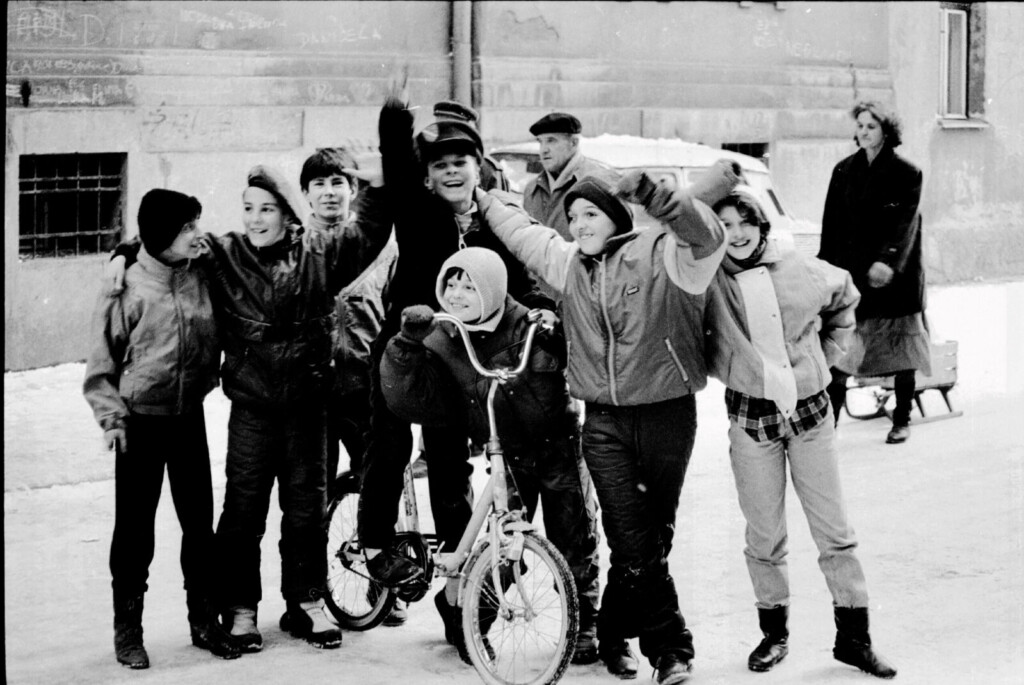
A woman in her sixties stops at the corner of Zmaja od Bosne, the road everyone still calls Sniper Alley, and does not look up at the tram passing behind her. She is waiting for someone, checking her phone, irritated at a delay of three minutes. Behind her a group of tourists photographs a Rose, one of the resin-filled shell scars poured into the pavement like a dark red flower, marking a spot where mortar fire once tore into a crowd of civilians. She does not glance at it. For her it is not a monument. It is the pavement outside a pharmacy she has used for forty years, before, during, and after, and the fact that strangers now kneel to photograph it strikes her as neither offensive nor moving. It simply is what the street is now, layered, and she has stopped expecting it to be only one thing.
This layering is the condition of the city, and it produces a memory that refuses to sit still. Ask someone who was an adult in 1992 what the siege meant and you will often get precision: the exact day the water stopped, the name of the neighbor who died fetching bread, the brand of cigarettes traded for flour. Ask someone born after the Dayton Agreement was signed in December 1995, someone who grew up scrolling past the same Roses on their way to school, and the answer is frequently thinner, more mediated, absorbed through documentaries, family silences, or the version taught in a history curriculum still argued over by three ethnically divided school systems. Bosnia’s postwar education famously produced the phenomenon of “two schools under one roof,” Bosniak and Croat children attending the same building on staggered schedules with different textbooks, a structural metaphor for a memory that was formally reunified but never actually merged.
Vjekoslav Perica and other scholars of Yugoslav memory politics have noted how the successor states each built commemorative architectures suited to national narratives rather than shared ones, and Sarajevo is no exception. The Siege Museum, the Tunnel of Hope preserved beneath the airport, the various plaques scattered through Marijin Dvor, none of them agree on emphasis. Some foreground Bosniak suffering specifically, others insist on a multiethnic city betrayed by nationalist projects from outside, still others avoid interpretation altogether and simply present timelines, as if sequencing alone could substitute for meaning. The Research and Documentation Center in Sarajevo spent years compiling the Bosnian Book of the Dead, an exhaustive, name-by-name casualty count finished in 2007, arriving at a verified figure near 97,000 dead across the war, a number offered specifically to counter inflated wartime propaganda from all sides. Even counting the dead, it turned out, was a political act.
Tourism complicates this further, not as an intrusion but as a strange, half-welcomed economy. War tours, run frequently by men who survived the siege as teenagers, take visitors through former front lines, ending at the Tunnel Museum where a fifty-meter stretch of the original passage remains walkable, low-ceilinged, damp, exactly as inadequate as it was when it kept a quarter million people alive. Guides describe shelling with the practiced cadence of men who have told the story four times a day for a decade. Is this healing or reenactment fatigue? Sometimes both, sometimes neither, depending on the guide and the day.
Meanwhile the physical city keeps overwriting itself. The rebuilt National Library, reopened in 2014 after Serb shelling destroyed nearly two million volumes in 1992, now hosts weddings in its restored Moorish revival hall, a building that was simultaneously a cultural catastrophe and, twenty years later, an Instagram backdrop. Bullet-pocked facades stand beside glass-fronted cafes financed by Gulf investment, part of a construction boom that has made parts of downtown Sarajevo look like any mid-sized European city chasing foreign capital, while ten minutes away Grbavica still carries facades that were never repaired, either from neglect, poverty, or a stubborn refusal to let the wound close cosmetically.
What remains constant is the disagreement over what remembering is even for, whether it should produce reconciliation, vigilance, grief, or simply an accurate ledger nobody is allowed to falsify again, and the city carries all four purposes at once, unresolved, functioning, alive.
🕯️ Sieges, Memory and the Wounds of War
The story of Sarajevo’s endless siege calls for context beyond the battlefield: the politics of atrocity, the human cost of displacement, and the fragile mechanisms built to seek justice afterward. These related pieces explore the broader historical and moral landscape surrounding twentieth-century conflict and its aftermath.
War crimes: history and international justice
Understanding the Siege of Sarajevo requires grappling with how international law attempts to name and punish atrocities committed against civilians. This article traces the evolution of war crimes tribunals and the slow, often imperfect march toward accountability. It offers essential context for the legal reckonings that followed the Bosnian conflict.
GO TO THE SELECTION: War crimes: history and international justice
The foibe: history and memory of an Italian tragedy
The foibe massacres remind us that the Balkans and their neighboring regions carry deep, often unresolved scars from twentieth-century violence. This piece examines how memory, denial, and national narratives shape the way societies process mass killings. It resonates with Sarajevo’s own struggle to reconcile history with lived trauma.
GO TO THE SELECTION: The foibe: history and memory of an Italian tragedy
The Giuliano-Dalmatian exodus: history and testimonies
Mass displacement is one of the most enduring legacies of war, and the Giuliano-Dalmatian exodus offers a powerful parallel to the forced departures endured by Sarajevo’s besieged population. This article recounts the human stories behind statistics, giving voice to those uprooted by geopolitical upheaval. It underscores how exile becomes an inseparable part of a city’s collective memory.
GO TO THE SELECTION: The Giuliano-Dalmatian exodus: history and testimonies
Racial violence worldwide: Emblematic cases of recent history
Racial and ethnic violence has repeatedly reshaped modern history, and this survey of emblematic global cases helps frame the ethnic dimensions that fueled the Bosnian war. By placing Sarajevo within a wider pattern of persecution, the article highlights recurring mechanisms of hatred and division. It’s a sobering companion piece to any study of the siege’s origins.
GO TO THE SELECTION: Racial violence worldwide: Emblematic cases of recent history
🎬 Keep Exploring War, Memory and Humanity on Indiecinema
If the history of Sarajevo’s siege has stirred your curiosity about resilience, conflict, and memory, Indiecinema offers a curated selection of independent films that探索 these very themes with depth and nuance. Dive into stories that challenge, move, and illuminate the human condition beyond the headlines.
👉 EXPLORE THE CATALOG: Watch Indie Films in Streaming
A vision curated by a filmmaker, not an algorithm
In this video I explain our vision