The Visceral Logic of Retribution
You have imagined it. Not vaguely, not as a distant fantasy you could disavow — but with specific detail. A face. A location. A sequence of events that ends with someone experiencing exactly what they made you experience, or worse, and with you watching it happen. You have felt, in that moment of private imagination, something that did not feel like rage. It felt like geometry. Like a proof completing itself. The emotional temperature dropped, the noise cleared, and for a few seconds you were not suffering — you were calculating. That calm is the thing no one talks about honestly, because it implicates everyone who has ever felt it, which is everyone.

The philosopher Jeffrie Murphy spent much of his career trying to rescue resentment from its reputation as a moral failing. In his 1988 collection Forgiveness and Mercy, co-written with Jean Hampton, he argued that resentment — the refusal to wave away an injury — is not a psychological defect but a form of self-respect, a declaration that the violation mattered and that the violated person matters. To surrender resentment too quickly, he suggested, is not virtue but self-erasure. This reframing did something philosophically precise: it separated the emotion from the action it might produce, and in doing so it forced a question that mere condemnation of revenge never had to face. If the feeling is not pathological, what exactly are we asking people to abandon when we tell them to let go?
The nervous system does not process injustice the way a court does. Antonio Damasio’s research into the somatic architecture of decision-making, developed across Descartes’ Error in 1994 and The Feeling of What Happens five years later, demonstrated that the body maintains what he called somatic markers — physical states that function as rapid evaluative signals, shortcuts that collapse complex moral and practical calculations into visceral readiness. When someone harms you, the body registers not just pain but asymmetry. A ledger has been opened that the organism experiences as structurally incomplete. The desire for retribution, in this light, is not an irrational eruption overriding a cooler rational self — it is the body attempting to close an account that physiology insists must balance.
This is why revenge fantasies produce relief even when they remain entirely imaginary and entirely unfulfilled. The closure the nervous system craves is symbolic, not material. It is the narrative completion of an event that was interrupted at its worst point. Trauma research has shown persistently, going back at least to Bessel van der Kolk’s clinical work in the 1980s and synthesized in The Body Keeps the Score in 2014, that traumatic memory does not behave like ordinary memory — it does not recede chronologically but instead remains present-tense, a loop that the organism replays not from compulsion but from an unresolved drive toward resolution. The revenge fantasy is, structurally, an attempt to rewrite the ending of that loop. To give the story a different last frame.
What makes retribution seductive is therefore not its brutality but its legibility. Suffering is opaque, sprawling, resistant to meaning. Punishment is a sentence in the grammatical sense — it has a subject, a verb, an object, and it ends. The moral universe it proposes is stripped of ambiguity: someone did something, someone pays for it, the scales register zero. This is not primitive thinking. It is thinking under conditions of extreme cognitive load, reaching for the simplest structure that can hold the weight of what happened. The fact that this simplicity is often an illusion does not diminish the force with which the mind reaches for it, because the mind reaching for it is not reasoning poorly — it is reasoning in pain, which is an entirely different operation.
Darkness, This Is my Revenge

Thriller, by Giuseppe Di Giorgio, Italy, 2022.
The film tells the story of a mysterious killer who begins murdering women, leaving a message behind: "This is my revenge." Commissioner Soavi investigates, but is unable to find any clues that point him in the right direction. One thing that all the victims have in common is that they frequent a gym, but despite interrogating Nico, the gym's manager, and the other trainers, nothing useful emerges. Retired commissioner Taddei, who was involved in an unsolved case twenty years earlier, sees similarities between the two cases and tells Soavi about them. Meanwhile, the killer continues to murder.
The murders are shown in a quick, brutal, and visually effective manner. The film is based on a novel by David Pratelli, and it blends elements of thriller and detective fiction, with psycho-thriller influences in the concluding development. The narrative takes place on two different but interconnected timelines. The film keeps the audience's attention until the discovery of the culprit, and it is a well-made and suspenseful thriller.
LANGUAGE: italian
SUBTITLES: English, Spanish, French, German, Portuguese
Justice as Civilized Vengeance
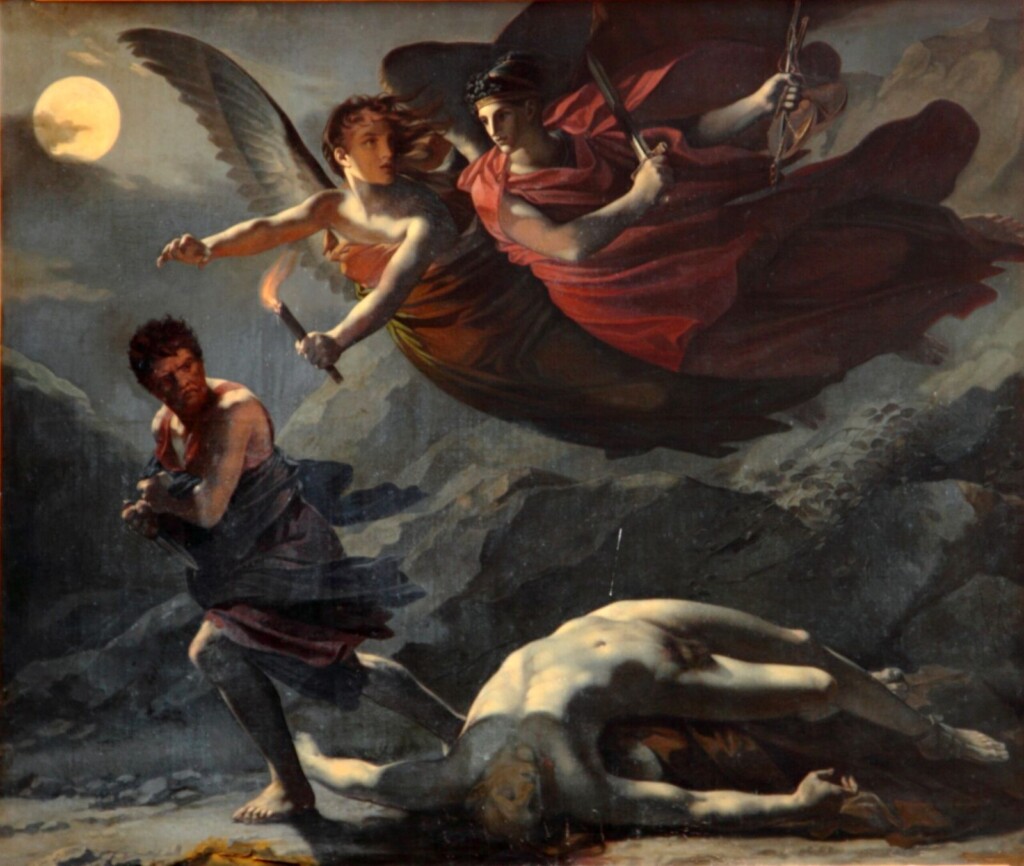
You already know the verdict before the gavel falls. Not because you have insider knowledge of the case, but because you have felt — in the chest, wordlessly — that some wrongs carry their own sentence, that certain acts seem to demand a specific weight of suffering in return, and that this demand feels nothing like barbarism. It feels like order.
Nietzsche saw this clearly enough in 1887 to make his contemporaries uncomfortable. In On the Genealogy of Morality, he traced what he called ressentiment — the particular emotional architecture of those who cannot act directly on their pain, who instead transmute it into a moral system that condemns the powerful by redefining their power as guilt. The genius of the move was not that it was dishonest. It was that it worked. The weak did not simply endure; they built courthouses. They wrote penal codes. They appointed magistrates to wear the robes that laundered the rage into procedure.
Kant, working nearly a century earlier, had tried to rescue retribution from this psychological genealogy by grounding punishment in pure reason. In The Metaphysics of Morals, published in 1797, he argued that to fail to punish a murderer was itself a moral injury — an implicit claim that the crime had no weight, that the victim was not worth the accounting. This was not vengeance, Kant insisted; it was respect for rational law, for the categorical structure of human dignity. But what the argument reveals under pressure is its own symmetry with the thing it claims to transcend: a ledger, a debt, a pound of flesh rebranded as principle.
The Enlightenment project needed this distance desperately. The spectacle of public torture — the breaking wheel, the drawn-and-quartered body exhibited at the city gates — was not something premodern populations experienced as aberration. Michel Foucault documented in Discipline and Punish, published in 1975, how sovereign punishment was theatrical precisely because it needed witnesses. The crowd was not incidental. The crowd was the mechanism. When reformers like Cesare Beccaria, writing in On Crimes and Punishments in 1764, argued for measured, rational penalties over spectacular brutality, they framed the change as humanitarian. What they also accomplished was moving the satisfaction inward — converting the visible wound into an invisible one, the broken body into the broken years, the public square into the prison cell. The suffering continued. The audience simply stopped being able to see it.
This is not a cynical point about reformers being frauds. Beccaria genuinely reduced torture. Fewer people burned. These are not small things. But the structural logic of equivalence — that harm must be answered by a proportional harm administered by the state — survived every reform intact, traveled through the Enlightenment, and arrived in the twenty-first century wearing the language of rehabilitation while still organizing itself around duration: ten years, twenty years, life. The number is not a therapeutic prescription. It is a translation of the original wound into calendar pages, which is another way of saying it is a translation of grief into arithmetic.
What makes this architecture so durable is not that it satisfies. Study after study in victimology — including Robert Enright‘s longitudinal work at the University of Wisconsin in the 1990s — found that legal outcomes rarely produced the relief survivors anticipated. The verdict arrives and the grief does not lift. What the system provided was not healing but form: a container that gave the desire for equivalence a legitimate address, a place to live without being called by its older name.
And so the mask holds, not because it deceives everyone who looks at it, but because removing it offers nothing in its place — no architecture, no ceremony, no way to stand before a loss and say: this was answered.

The Executioner We Elect
You voted for the last politician who promised to be tough on crime. You did not think of yourself as cruel when you did it. You thought of yourself as reasonable, as someone who had simply had enough, as a person with a legitimate grievance against a world that seemed to be getting away with something. The ballot felt clean in your hand.
What Philip Zimbardo discovered in the basement of Stanford’s Jordan Hall in August 1971 was not that some people are monsters. His experiment, terminated after six days of its planned two weeks because the situation had collapsed into genuine abuse, demonstrated something far more disturbing: that the costume is enough. College students randomly assigned the role of prison guard began within hours to harass, humiliate, and psychologically torment other students randomly assigned as prisoners. No training, no ideology, no history of violence. Just a uniform, a whistle, and an institutional permission to be in charge. Zimbardo’s own data, published across several studies and synthesized in his 2007 work “The Lucifer Effect,” pointed not at individual pathology but at situational architecture — the idea that the right structural conditions will reliably produce cruelty from ordinary human material.
This is what democratic punishment has always quietly known and never openly admitted. The executioner is not hired because he is different from the rest of us. He is hired because he is not. The entire apparatus of legal sanction — the judge’s robe, the prison uniform, the clinical language of sentencing guidelines — functions as a distributed Zimbardo experiment at civilizational scale. We construct roles that require the performance of cruelty, then populate those roles with people we call professionals, then express horror when the performance occasionally exceeds the script.
Hannah Arendt sat through the 1961 Jerusalem trial of Adolf Eichmann and came back with a finding that scandalized almost everyone who needed a monster. What she saw in the dock, reported in her 1963 “Eichmann in Jerusalem,” was a bureaucrat. A man of staggering ordinariness, incapable of independent thought, entirely fluent in the language of procedure and paperwork. His evil was not deep — it was shallow in a way that was somehow worse than depth would have been. Arendt’s phrase “the banality of evil” has since been domesticated into a kind of cultural wallpaper, quoted so often it has lost its violence. But the actual violence of what she was saying is this: the machinery of atrocity does not require willing sadists. It requires willing administrators. It requires people who are very good at not asking certain questions.
The legal system of any modern democracy is staffed almost entirely by people who are very good at not asking certain questions. The prosecutor who seeks a thirty-year sentence for a nonviolent offense is not thinking about the body that will age inside a cell. The parole board member who denies release to reduce political risk is not thinking about the specific human being whose file is open on the table. The electoral system that rewards politicians for severity and punishes them for mercy creates a permanent structural incentive to escalate — so that each generation of voters receives a slightly harsher version of the previous one’s justice, and calls it progress.
What this structure produces is not justice in any philosophical sense that Kant, Rawls, or anyone who has seriously engaged with the question would recognize. It produces the laundering of revenge through procedure. The desire to hurt someone who has hurt us, or who we fear might hurt us, passes through courts and sentences and release dates and emerges on the other side smelling of neutrality, of proportionality, of the measured response of a society that has chosen law over barbarism.
The mask does not conceal the executioner from us. It introduces him.
Narrative Capture and the Satisfaction Economy

You are sitting in a theater — not a metaphor, a real one, the kind with velvet seats and a screen large enough to make your pulse feel like it belongs to someone else — and somewhere between the second act and the third, you stop wanting justice. You want blood. The distinction has already been made for you, upstream, by a structure so old it predates cinema by several centuries.
The public execution was never simply punishment. Michel Foucault documented in Surveiller et Punir, published in 1975, how the scaffold was a theater of sovereignty, a place where the king’s power was restored through spectacle, where the crowd’s presence was not incidental but constitutive. The body of the condemned was the medium through which political authority wrote itself back into legibility. What Foucault could not have fully anticipated was that when the scaffold disappeared from public squares, it did not vanish — it migrated into narrative form, and the migration made it more durable, more portable, more intimate. The crowd no longer needed to gather. The gathering happened inside the individual viewer, alone, in the dark.
Aristotle had called it catharsis, and for two and a half millennia, critics have used that word as though it were a seal of approval, a sign that the emotional discharge produced by tragedy was healthy, civic, purifying. But catharsis is a hydraulic metaphor — it assumes that pity and fear are pressures that need releasing, that the narrative exists to manage an interior economy of tension. What this model cannot account for is the way repetition works: the person who seeks catharsis once, returns. The release is not a resolution but a reset, and the appetite it trains becomes structural, a groove worn into expectation. By the time the credits roll, the viewer does not feel cleansed. They feel calibrated — tuned to a frequency that now requires the arc of transgression, suffering, and retributive closure to feel coherent at all.
The entertainment industry did not invent this frequency, but it industrialized it with a precision that would have astonished the anatomists of spectacle in earlier centuries. Between 2010 and 2023, the dominant grammar of prestige television was essentially identical across hundreds of distinct titles: a wrong is committed, the wronged party endures, the wronged party strikes back. The variation in setting, character, and moral complexity gave the impression of diversity while the underlying skeleton remained unchanged. Audiences were not consuming different stories. They were consuming the same story refined into increasingly efficient delivery mechanisms, the way pharmaceutical compounds are isolated from plant matter — potency increased, noise removed.
What this refinement produces, outside the theater and the streaming platform, is a population whose emotional literacy around punishment has been systematically shaped by a structure that equates resolution with visible, individual retribution. When a political figure promises to be tough on crime, the response is not purely ideological — it is narratological. The promise rhymes with something the audience has been trained, across thousands of hours of consumption, to recognize as the shape of an ending. Structural remedies — housing policy, addiction treatment, the slow redistribution of material conditions that produce crime in the first place — do not have a third act. They do not produce a visible moment where the score is settled and the screen goes dark. They exist in a temporality that narrative cannot easily inhabit, and so they are experienced not as solutions but as evasions, as the kind of answer that feels like the storyteller has lost the thread.
The political consequences of that feeling are not abstract. In 1994, the United States Congress passed the Violent Crime Control and Law Enforcement Act, allocating nearly sixteen billion dollars to prison construction at a moment when sociological evidence already indicated that incarceration rates had no reliable correlation with declining crime. The bill was popular. Its popularity had a grammar.
What Revenge Refuses to Know About Itself
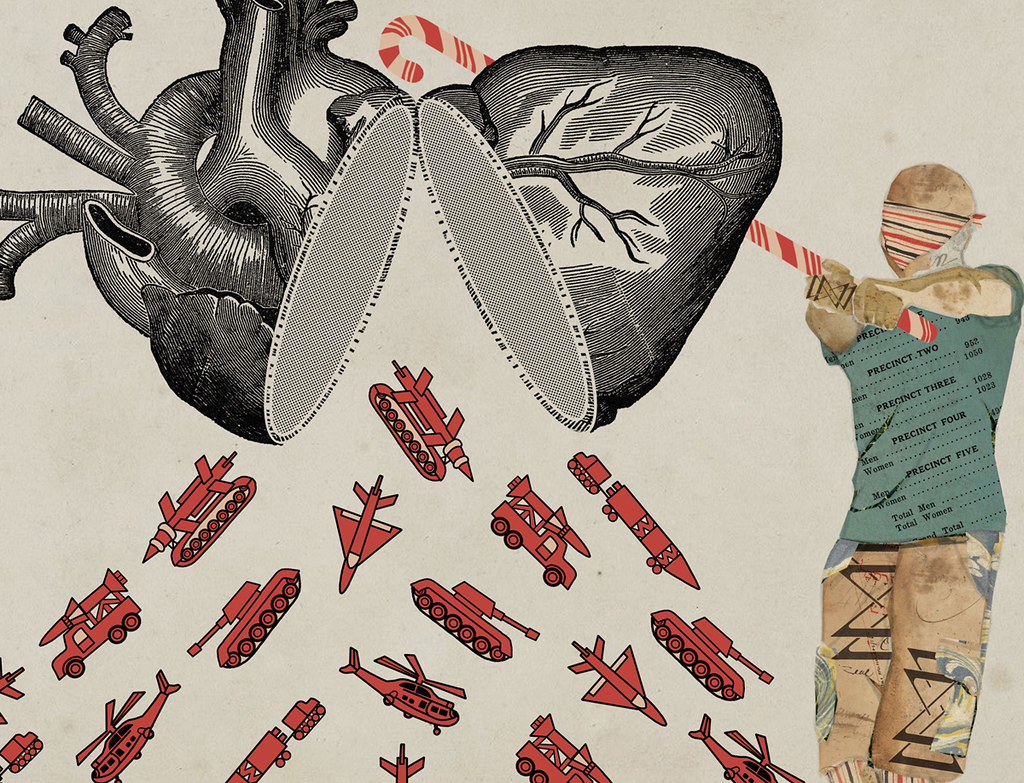
You wake up one morning and realize the wound is the only thing still holding the architecture together. Remove it and you don’t become free — you become structurally unsound, a building whose load-bearing wall was always the grievance you swore you were trying to demolish.
This is what revenge cannot confess to itself: that the injury has long since stopped being something that happened to the self and has become the self. Psychoanalytic object relations theory, particularly the strain running through Melanie Klein’s work on the paranoid-schizoid position, describes how the traumatized psyche splits experience into persecutory and idealized poles — but what it does not always make explicit is how permanently seductive that splitting becomes. The persecutor is not merely a villain in your private narrative. The persecutor is your compass. Without them orienting the field, you lose north entirely.
Identity organized around victimhood is not a pathology exclusive to fragile personalities. It is a rational adaptation to a world that briefly, catastrophically, confirmed its worst tendencies. When someone genuinely harms you, the wound arrives with its own coherent explanation of reality: you were right to distrust, right to guard, right to feel what you felt. The injury becomes retrospective proof of a worldview that now, suddenly, makes terrible sense. What the avenger is protecting when they pursue retribution is not justice in any procedural sense — it is the coherence of that explanation, the one that finally made the chaos legible.
René Girard spent decades mapping the mechanism that makes this coherent explanation catastrophically transferable. His 1972 work La Violence et le Sacré — Violence and the Sacred — introduced the concept of mimetic desire to demonstrate that human beings do not want things independently; they want what others want, orient themselves by mirroring others’ desires and rivalries. Applied to vengeance, the implication is devastating: the avenger does not transcend the logic of the original aggressor. They absorb it. Every act of revenge is structurally mimetic — it copies the grammar of the original violence even while claiming to answer it. The executioner and the victim swap masks, and what persists is not justice but the contagion itself, spreading through every party who believed they were finally putting it to rest.
What Girard calls the sacrificial crisis — the collapse of distinctions between aggressor and avenger, between the original violence and its mirror — is not a theoretical abstraction. It is the lived experience of families who have been feuding for three generations and cannot name the first cause. It is the geopolitical history of the twentieth century read honestly, where every reprisal contained within it the genetic code of the next atrocity. The Treaty of Versailles did not conclude the logic of World War One; it metabolized it, passed it forward with interest.
The cost the avenger absorbs but cannot invoice is the permanent occupation of a self that was supposed to be temporary — the self that exists only in relation to the wound. Every step toward vengeance deepens the colonization. The person you were before the injury recedes further, and the person constituted by the injury advances, until the revenge, if it is ever completed, delivers you not to freedom but to a vacancy. What do you think about now? What do you want? What organizes the morning? The questions arrive like unwanted guests into a house that was, for years, efficiently managed by hatred.
Revenge seduces because it promises an ending, and the human mind will pay almost any price for the grammatical closure of a final sentence — not understanding, until the period is set, that the story it just finished was the only one it still knew how to tell.
A vision curated by a filmmaker, not an algorithm
In this video I explain our vision
⚔️ The Dark Seduction of Revenge and Justice
Revenge is one of humanity’s oldest moral obsessions — a desire that promises closure but often delivers only deeper entanglement. The executioner’s mask conceals not justice but the hunger for control, recognition, and release from pain. These articles trace the philosophical, psychological, and literary roots of that seduction.
The Psychology of Evil: Why People Commit Violent Acts
Understanding why people commit violent acts is essential to understanding the logic of revenge. Psychology reveals that the impulse to harm is rarely born from pure evil, but from wounded identity, humiliation, and the desperate need to restore a shattered sense of self. The executioner’s mask is often the face of someone who once suffered deeply.
GO TO THE SELECTION: The Psychology of Evil: Why People Commit Violent Acts
Unresolved Conflicts: When Resentment Becomes a Prison
Resentment is the quiet engine beneath most acts of revenge, growing in the dark long before it erupts into action. When conflicts go unresolved, they do not dissolve — they harden into structures of the psyche that imprison both victim and perpetrator. This article explores how unresolved emotional wounds transform into life-defining obsessions.
GO TO THE SELECTION: Unresolved Conflicts: When Resentment Becomes a Prison
Dürrenmatt’s The Visit: Analysis
Dürrenmatt’s The Visit stages one of literature’s most chilling meditations on collective revenge and the corruption of justice by wealth and old grievance. A woman returns to her ruined hometown with an offer: infinite money in exchange for the death of the man who wronged her. The play strips revenge of its romantic veneer and exposes it as a social and moral catastrophe.
GO TO THE SELECTION: Dürrenmatt’s The Visit: Analysis
Banal Evil and Radical Evil: Kant and Arendt
Hannah Arendt and Immanuel Kant offer two essential philosophical frameworks for understanding the difference between punishment and evil — whether ordinary or radical. The banality of evil reminds us that the executioner rarely sees himself as a monster, but as an instrument of a larger, seemingly justified order. This tension between moral clarity and self-deception is at the very heart of the revenge fantasy.
GO TO THE SELECTION: Banal Evil and Radical Evil: Kant and Arendt
Discover the Cinema That Dares to Ask the Hard Questions
If these themes have stirred something in you, Indiecinema is where the conversation continues — through films that don’t look away from darkness, guilt, or the moral vertigo of human desire. Explore our streaming catalog and find the independent cinema that challenges, unsettles, and illuminates.
👉 EXPLORE THE CATALOG: Watch Indie Films in Streaming
👉 Questo articolo fa parte dell'hub Psychology: The Complete Guide to Mind, Behavior, and Human Nature
A vision curated by a filmmaker, not an algorithm
In this video I explain our vision